College history
From our origins in Manchester 1786 as a provider of higher education to religious non-conformists through to our arrival in Oxford in the late 19th century, Harris Manchester College's history has been rich and varied, and characterised throughout by a distinctive and radical spirit.
Introduction
In a recent article in the Bulletin of the John Rylands Library, Dr Heather Ellis explains the distinctive educational culture created by Manchester's dissenting communities in the eighteenth and nineteenth centuries, calling it "self‑consciously diffused, civic and participatory". Unlike England's ancient universities, which were largely closed institutions until the mid‑nineteenth century, Manchester fostered a civic and inclusive culture of learning shaped by leading Nonconformists in the city. She goes on to note that "excluded from Oxford and Cambridge, Manchester's Unitarians, in particular, sought to shape the city's educational culture according to the Enlightenment ideal of polite learning as a public endeavour." It was within this environment of Dissent and independent thought, alongside the emergence of industrialisation, that the story of Harris Manchester College began.
Beginnings in 1786
The College traces its origins to 1786, when the Manchester Academy was founded as the successor to the Warrington Academy and as one of the last in the distinguished line of influential Dissenting Academies. Though established by Unitarians, it imposed no religious tests and welcomed students of all denominations. Meeting first in Cross Street Chapel under Dr Thomas Percival, the Academy adopted Warrington’s broad and progressive curriculum, reflecting the ideals of rational dissent and intellectual openness that would shape its future.
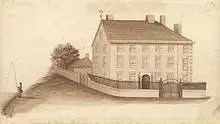
An image of the Warrington Academy, a forerunner of the Manchester Academy
A peripatetic existence, 1803-1853
Financial pressures and a lack of staff required the Academy to relocate and in 1803 it moved to York, becoming Manchester College, York, under the long principalship of Charles Wellbeloved. On his retirement, falling student numbers prompted another move and in 1840 the institution returned to Manchester as Manchester New College. This period saw the arrival of influential scholars such as James Martineau, Francis Newman, William Gaskell, and John James Tayler.
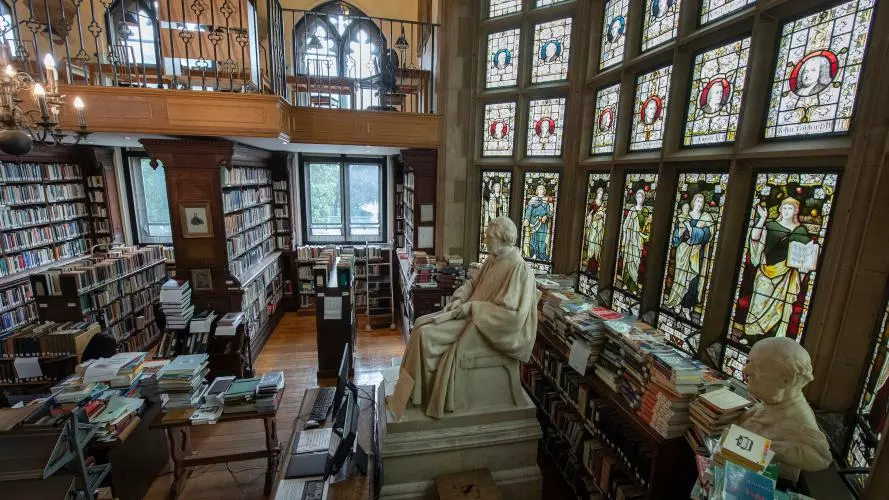
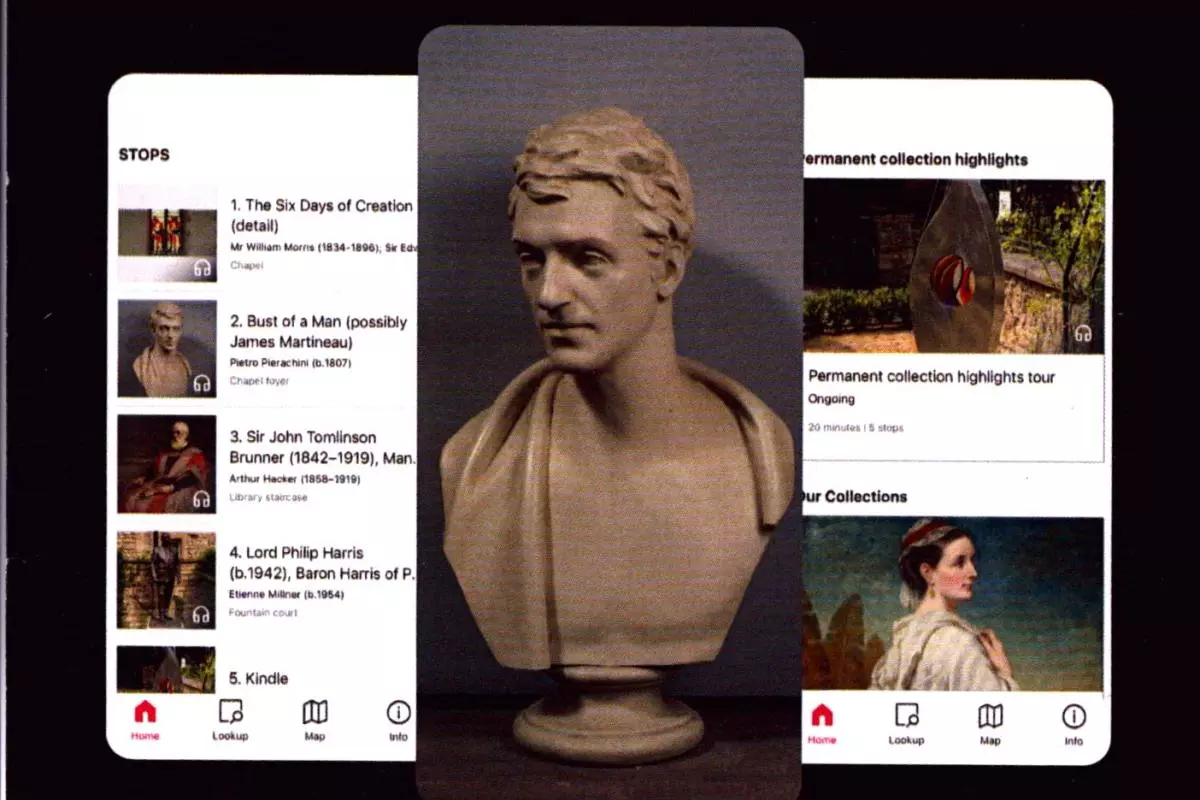
The statue of former Principal James Martineau in the College's Library
London, 1853-1889
As the educational landscape developed, with the emergence of Owens College (later Manchester University) and the establishment of UCL and London University, the College once again relocated. In 1853 it moved to London to pursue stronger academic connections and greater access to students. Located in University Hall, Gordon Square, the College continued its commitment to inclusivity, admitting women to lectures and welcoming its first Hungarian students through longstanding ties with the Unitarian Church of Transylvania.
Oxford, the final destination – 1889
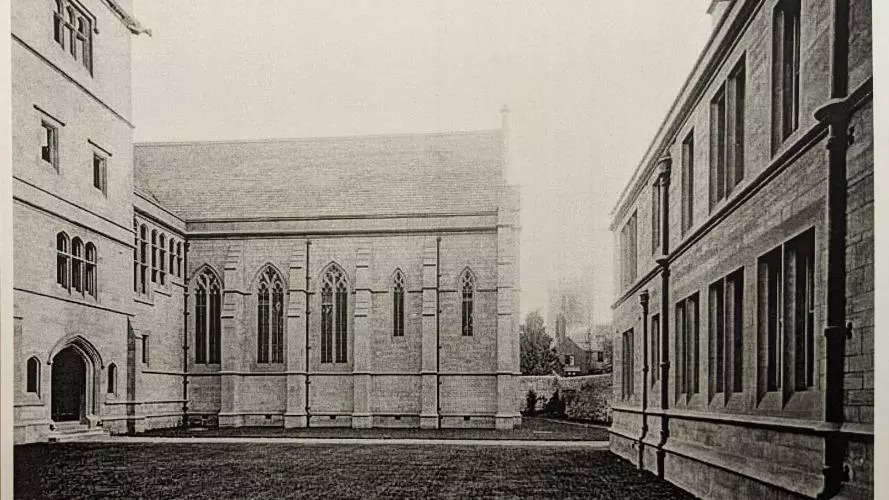
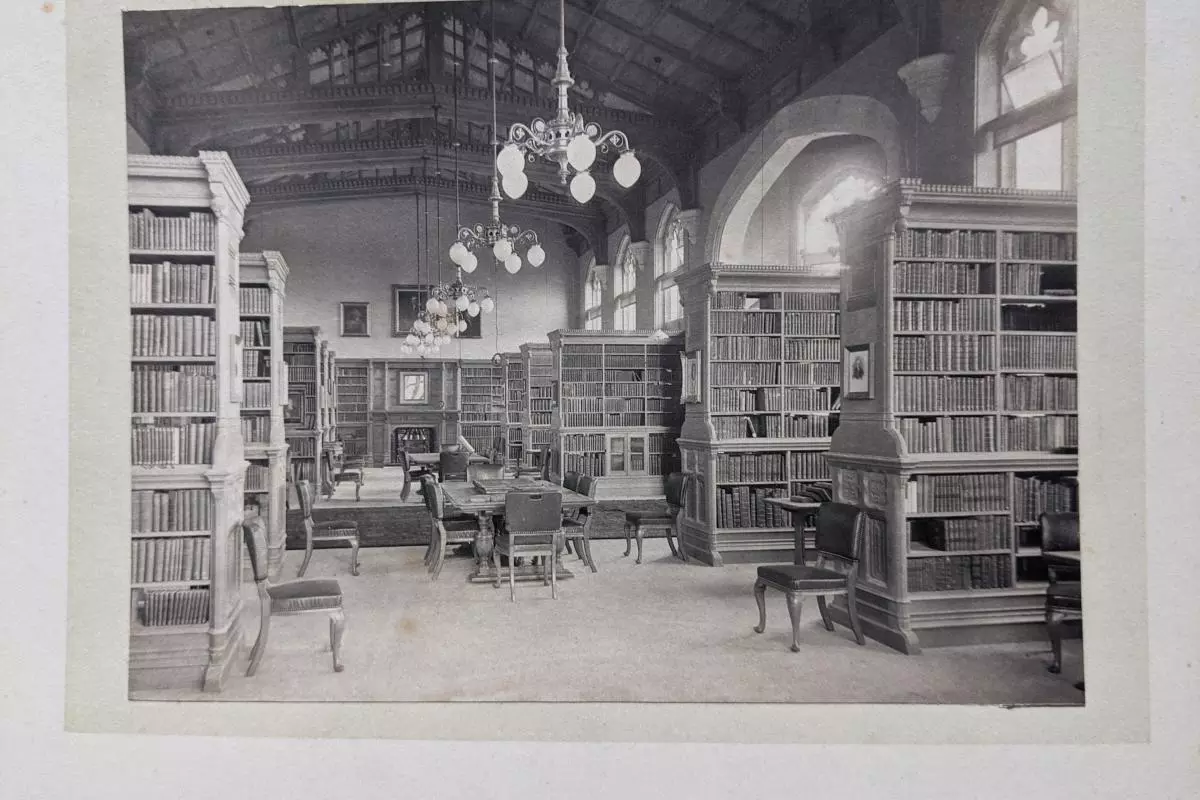
The Tate Quad, pictured in the 1890s
The University Tests Act of 1871 opened Oxford and Cambridge to Nonconformists (outside theology) prompting a fresh debate about where best to situate the College. In 1888 the Trustees voted, by a narrow margin, to move to Oxford settling there in 1889 as Manchester New College. It commissioned new buildings by Thomas Worthington, completed in 1893 and enriched with contributions from Edward Burne‑Jones and William Morris in the Chapel, and a library endowed by Sir Henry Tate. In response to a request from New College, the College soon removed “New” from its name and became Manchester College, Oxford.
The move to Oxford began a period of stability and intellectual curiosity. By the late nineteenth and early twentieth centuries, students arrived from India, Japan, and across Europe. In 1901 Gertrude von Petzold became the first woman in the UK to complete ministerial training. The College gained a strong reputation in Comparative Religion under scholars such as J. Estlin Carpenter, and in progressive liberal philosophy and theology under L. P. Jack. Distinguished visitors were invited to lecture or teach at the College, including Professor Radhakrishnan, Professor William James, Graham Wallas, and Rabindranath Tagore.
During the Second World War, the College buildings were requisitioned by Naval Intelligence, specifically the Inter‑Services Topographical Department, who contributed to planning Operation Overlord. After the war, the College’s ties with the University of Oxford deepened. Students gained the right to matriculate for Oxford degrees in 1965, and in 1967 the College was approved to prepare students for the Diploma programme. Throughout this period students continued to study for London University degrees and the Unitarian ministry.
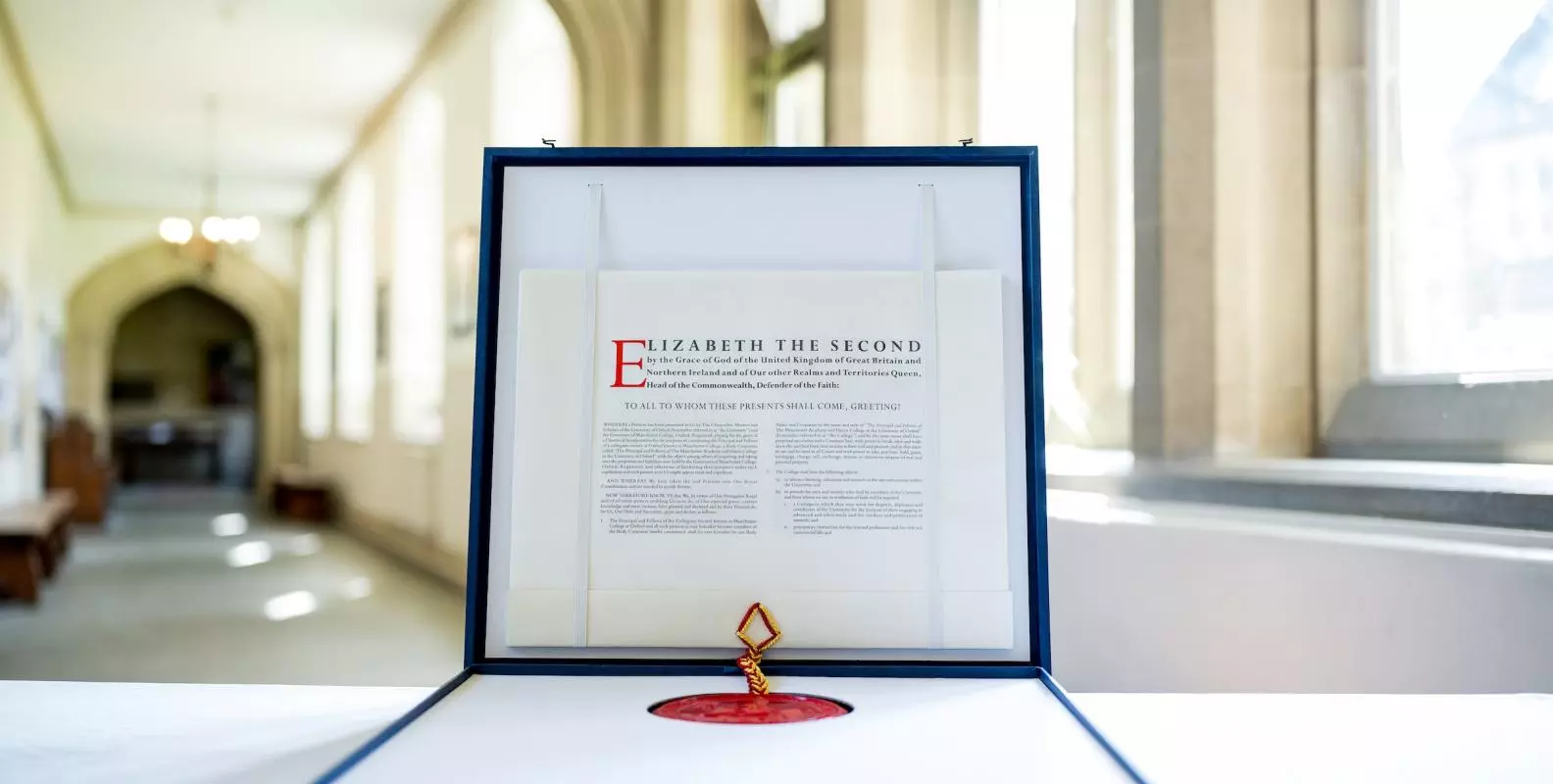
At the end of the twentieth century, during Ralph Waller’s principalship, the College became a Permanent Private Hall (1990) before achieving full collegiate status with the granting of a Royal Charter in 1996. A generous benefaction from Lord Harris of Peckham led to the adoption of its present name, Harris Manchester College.
Harris Manchester today
Today, under the leadership of Professor Beth Breeze, Harris Manchester College remains unique within the University of Oxford as the only college devoted exclusively to students aged 21 and over. It continues to uphold its long tradition of inclusivity and independent thought, values that have defined it from its earliest days in Manchester to its present home in Oxford.